

Journal
The Ultimate Guide to Caring for Luxury Leather: How to Make Your Belt Last a Lifetime
The Ultimate Guide to Caring for Luxury Leather: How to Make Your Belt Last a Lifetime
A connoisseur's handbook on cleaning, conditioning, and preserving the finest leather — so your investment only grows more beautiful with time.
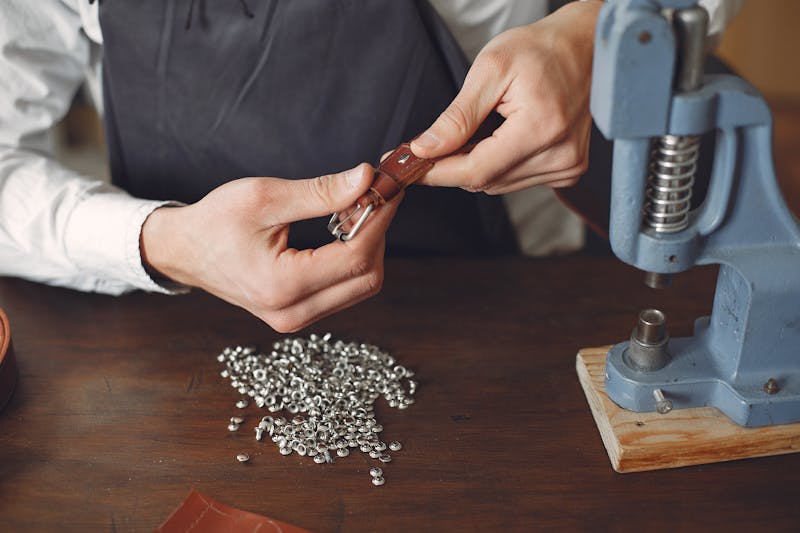
Artisanal precision — every stitch placed by hand, every hide selected for character & longevity.
There is a particular pleasure that comes with owning something made to last — an object that resists the disposable current of the age, that deepens in beauty precisely because it has lived. A great leather belt is one such object. Treated with the right care, a belt crafted from full-grain, vegetable-tanned Argentinian hide does not merely survive years of wear; it becomes more itself with every passing season, acquiring a patina that no factory can replicate. But that journey requires partnership. Leather is a natural material, and like any living skin, it needs to be nourished, protected, and respected.
This guide is your definitive reference for luxury leather care. Whether you have just unwrapped a new piece from Polo By Carlos Diaz — with its hallmark wax-dipped saddlery thread and single-piece Argentinian leather construction — or you are hoping to rehabilitate a beloved old belt, every technique here will serve you faithfully.
Part One Understanding What You Own
Before learning how to care for leather, it pays to understand the material itself. Not all leather is equal, and the quality of your starting point determines both the effort required and the results possible. There are three broad categories most consumers encounter:
| Leather Type | Characteristics | Care Potential |
|---|---|---|
| Full-Grain | The outermost, tightest layer of the hide. Retains the natural grain. Strongest and most breathable. | Excellent. Develops a rich patina over decades. Responds beautifully to conditioning. |
| Top-Grain | Sanded and refinished to remove natural imperfections. Uniform appearance but slightly less durable. | Good. Benefits from regular conditioning but patinas less dramatically. |
| Genuine / Bonded | Lower layers of the hide, or compressed scraps. Affordable but prone to cracking. | Limited. Care can slow deterioration but cannot replicate the longevity of full-grain. |
A note on Polo By Carlos Diaz leather: Every belt in the Classic Collection is cut from a single piece of full-grain Argentinian cowhide — sourced from the cattle-farming heartland of the Pampas, where the climate and grass produce hides of extraordinary density and suppleness. The leather is then sewn with wax-dipped saddlery thread, a technique borrowed from the finest polo tack-makers, which means the stitching is virtually impervious to water and abrasion. Care for it correctly, and this belt will outlive your wardrobes, your trends, perhaps even your address.
Part Two How to Clean a Leather Belt — Step by Step
Cleaning is the foundation of all leather care. Dirt, sweat, and body oils accumulate with every wear, and if left untreated they begin to break down the hide's natural fibres. The goal of cleaning is to remove this surface grime without stripping the leather's essential oils. Approached correctly, it takes no more than five minutes and can be done once a month for daily-wear pieces, or after any particularly demanding outing.
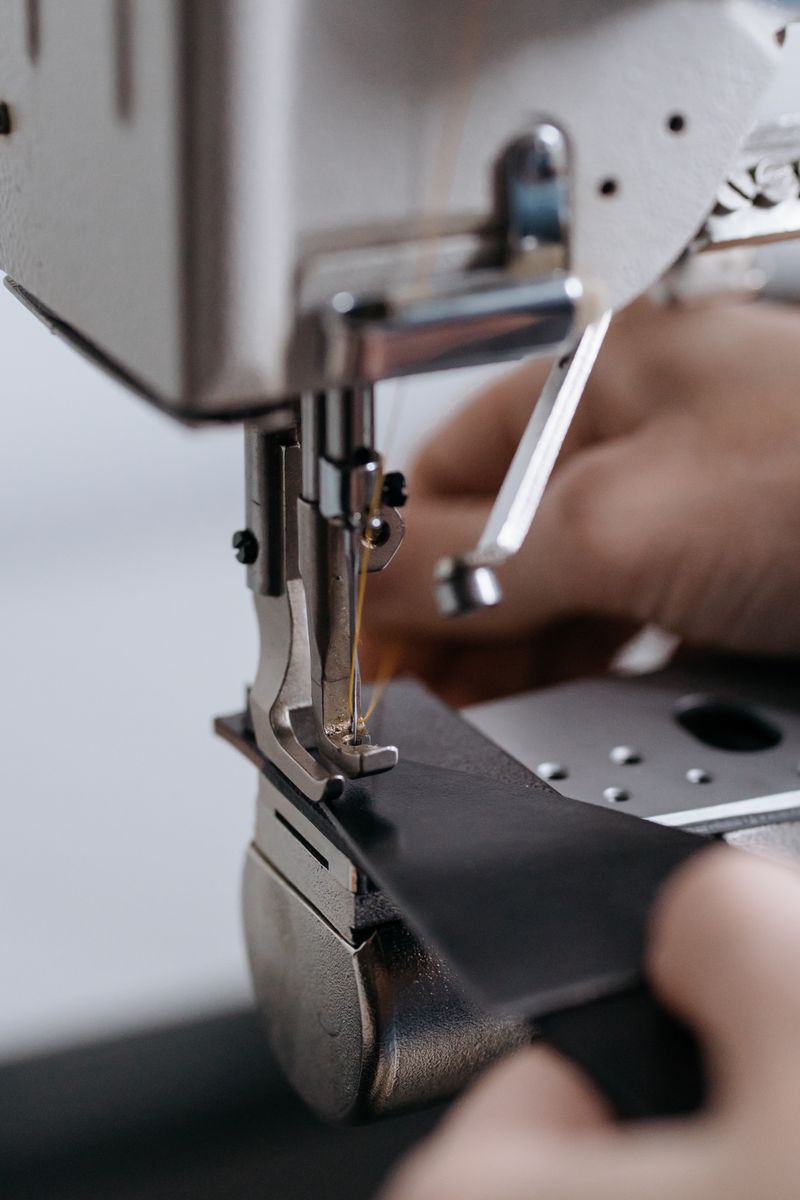
Precision stitching: the hallmark of a leather piece built to be maintained, not discarded.
-
01
Gather Your Supplies You will need a soft, lint-free cloth (ideally chamois or a microfibre square), a bowl of lukewarm water, and a pH-balanced leather cleaner or, in a pinch, a tiny drop of pure castile soap. Avoid household detergents, alcohol wipes, or baby wipes — they strip protective oils and can cause irreversible cracking.
-
02
Wipe Down Loose Dust Using a dry cloth, gently wipe the entire surface of the belt to remove any loose dust or debris. Always work in the direction of the grain — typically lengthwise along the belt. This prevents microscopic abrasions to the surface finish.
-
03
Apply Cleaner to the Cloth (Not the Belt) Dampen your cloth slightly — never soak it. Apply a small amount of leather cleaner to the cloth, not directly to the belt. Excess moisture can penetrate the leather and cause warping, dark spots, or mildew if trapped inside.
-
04
Work in Small Circular Sections Clean the belt in small, gentle, overlapping circles. For heavily soiled areas — particularly around the buckle hole and the keeper loop — apply slightly more pressure but keep your movements slow and controlled. The wax-dipped thread found on Polo By Carlos Diaz belts will hold firm, but it is always wise to avoid directing water pressure at the stitching line for extended periods.
-
05
Buff Dry with a Clean Cloth Immediately follow the cleaning pass with a dry cloth to lift any remaining moisture. Then allow the belt to air-dry naturally for at least 20 minutes in a shaded, well-ventilated space before proceeding to conditioning. Never use a hairdryer or place the belt near a heater — rapid heat desiccates leather and causes cracking.
Leather that is cleaned regularly requires far less conditioning over time. Think of it as preventative medicine for the most important accessory you own.— The Polo By Carlos Diaz Atelier
Part Three How to Condition Leather — Restoring Life to the Hide
If cleaning is hygiene, then conditioning is nourishment. The natural oils in leather — the same that give it flexibility and that glorious supple hand — migrate out of the hide over time, accelerated by heat, dryness, and UV exposure. When leather loses enough oil, it stiffens, cracks, and eventually breaks. Conditioning leather every two to four months replaces these lost oils and, in a premium hide like Argentinian full-grain, dramatically enhances the development of patina.
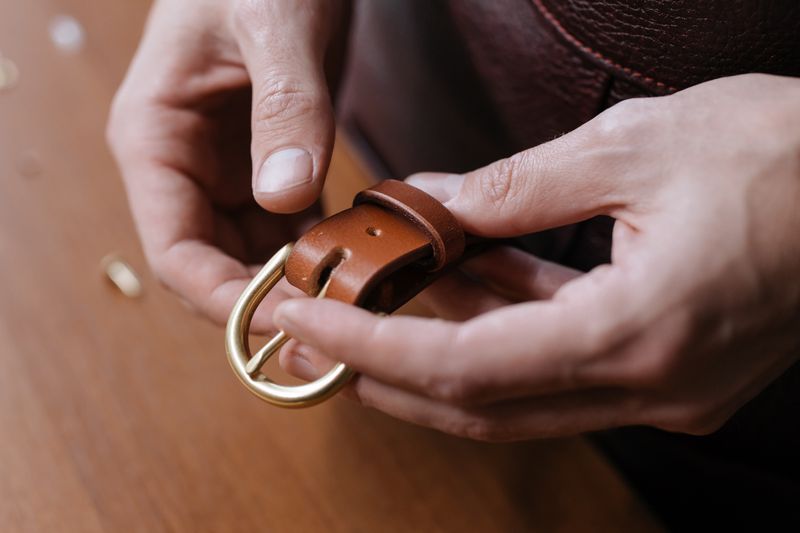
A belt's character is built not just in the making, but in the daily decisions of the person who wears it.
The best conditioners for fine belts are those based on natural waxes and oils — beeswax conditioners, neatsfoot oil compounds, and lanolin-based creams are all excellent choices. Avoid silicone-based products, which coat the surface without penetrating the hide, and petroleum-based conditioners, which can darken the leather unpredictably and degrade stitching over time.
-
01
Start with a Clean Belt Always clean before you condition. Applying conditioner over dirt drives the contaminants deeper into the grain. Follow the full cleaning routine above and allow the belt to dry completely.
-
02
Apply Conditioner Sparingly The golden rule of leather conditioning is: less is always more. Apply a pea-sized amount of conditioner to a clean, soft cloth. Less than you think is needed is almost always the right quantity.
-
03
Work It In with Even, Gentle Strokes Using long, even strokes in the direction of the grain, work the conditioner across the entire surface, paying close attention to the edges and the area around the buckle — the places that flex and are most prone to cracking. You will notice the leather immediately begin to deepen in colour slightly as it absorbs the product.
-
04
Allow to Absorb (Minimum 20 Minutes) Set the belt flat — never hanging — on a clean, dry surface away from direct sunlight. Let the conditioner absorb fully. Full-grain leather like the hides used in the Polo By Carlos Diaz Classic Belt collection will absorb a good conditioner entirely, leaving no greasy residue.
-
05
Buff to a Warm Lustre With a clean, dry cloth, buff the belt using small, brisk circular motions. This distributes any remaining conditioner, raises the surface temperature slightly, and brings up that characteristic warm, deep sheen that distinguishes a well-kept leather belt from every other accessory in the room.
Part Four Protecting Your Belt — Against Water, Sun, and Time
A leather belt at Polo By Carlos Diaz quality is not fragile — but it is not impervious either. Understanding the three great enemies of luxury leather will help you make informed, daily decisions that dramatically extend its life.
Water: Brief exposure to rain is survivable — especially for vegetable-tanned leather that has been regularly conditioned. But prolonged saturation causes swelling, followed by cracking on drying. If your belt gets wet, blot it gently, reshape it if necessary, and allow it to dry slowly at room temperature. A coat of beeswax conditioner applied once dry will restore suppleness and provide a modest waterproof barrier.
Sun & Heat: UV light is leather's silent adversary. Prolonged sun exposure bleaches colour, dries the hide, and oxidises the tanning agents, leaving the leather brittle and prone to surface cracking. Store your belts away from south-facing windows, and if you live in a hot climate, consider applying a UV-protective leather spray twice yearly.
Poor Storage: Never store a leather belt tightly rolled, bent at sharp angles, or compressed under other objects. The ideal storage is flat or loosely coiled in a breathable cotton bag, away from humidity and darkness. The cotton allows the leather to breathe; the darkness protects against UV fade. Polo By Carlos Diaz ships each belt with a dust bag precisely for this purpose — keep it, and use it.
Part Five The Long View — Leather as a Living Material
There is a concept in leatherworking — ancient, Argentinian, and very much alive in the philosophy of Polo By Carlos Diaz — that a truly great piece of leather should show its history without shame. The small crease at the buckle hole where your belt has fastened ten thousand times; the deepened colour at the wear point that catches the light differently from the rest of the hide; the faint impression of a back pocket, transferred faithfully by a wallet kept close — these are not blemishes. They are a biography, written in the most honest material on earth.
That biography, however, requires a diligent author. The difference between a belt that cracks and fades in five years and one that becomes an heirloom passed to the next generation is almost entirely a matter of care. Clean it monthly. Condition it seasonally. Store it thoughtfully. Treat the hardware with a soft cloth occasionally to prevent tarnishing. Rotate it with one or two other pieces to allow the leather adequate rest between wears.
The craftspeople at Polo By Carlos Diaz spend weeks hand-stitching each belt, selecting hides that meet an exacting internal standard of grain density, flexibility, and natural marking. They seal the thread with wax so the stitching line lasts as long as the leather itself. They edge and burnish each side by hand, so the finish is as complete as the face. They do all of this because they believe that the objects we wear every day should reward our attention — not punish our neglect, but truly reward our care. This guide is your half of that arrangement.
The patina of a well-kept leather belt cannot be manufactured. It can only be earned — year by year, day by day, one careful wipe of a soft cloth at a time.— Carlos Diaz, Founder
Quick Reference Luxury Leather Care — At a Glance
| Task | Frequency | Product Needed |
|---|---|---|
| Dry Wipe / Dust | After every wear | Soft chamois or microfibre cloth |
| Full Clean | Once a month (daily wear) | pH-neutral leather cleaner & damp cloth |
| Deep Condition | Every 2–4 months | Beeswax or lanolin-based conditioner |
| Waterproof Spray | Twice yearly | UV-protective leather spray |
| Hardware Polish | Monthly or as needed | Metal-appropriate brass or silver cloth |
| Professional Restoration | Every 3–5 years (optional) | Specialist leather restoration service |
Polo By Carlos Diaz — Classic Collection
Ready to Own a Belt That Lasts a Lifetime?
Explore our handcrafted Classic Belts — cut from single-piece Argentinian full-grain leather, stitched with wax-dipped saddlery thread, and built to reward a lifetime of care.
Shop Classic Belts Free shipping on all orders · Handcrafted in Argentina · Lifetime craftsmanship guarantee